
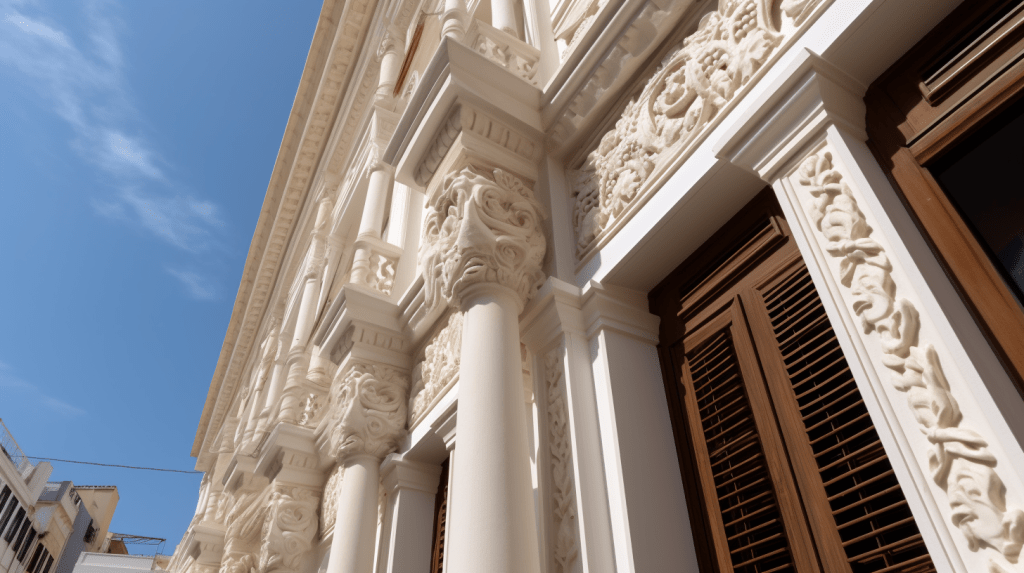
It’s often said that you can tell a lot about an architect’s skill and experience level by the way they handle their corners.
Corners are challenging to design because they’re the place where different strategies and patterns meet.
If one side of your building is clad in wood, and another is clad in stucco, how do you bring them together in a way that feels effortless?
Should you let the materials overlap, join in a miter, or would it look better to introduce a third element like a ribbon of stone at the boundary point?
The solutions are rarely obvious, but talented architects use experimentation, careful measurement, and occasionally optical illusion to work these problems out.
Of course, corners aren’t just for architects.
Opportunities for corner conflict show up in every field of design. They happen whenever two parts of your work intersect without an obvious strategy for handoff. If you’re adding music to a video, that’s a corner. If you’re asking your finance and marketing people to work together, that’s a corner too.
For designers who rush the process of corner refinement, it’s easy to end up with an undesired clash. All corners are difficult, but through careful iteration, persistence, and research of precedents, it’s often possible to achieve something elegant.
If people judged designers in your field by the quality of their corners, what might they say about the work you produce? If you don’t like the answer, how might you improve your approach to the kinds of corners you deal with most?
 Designable.blog