
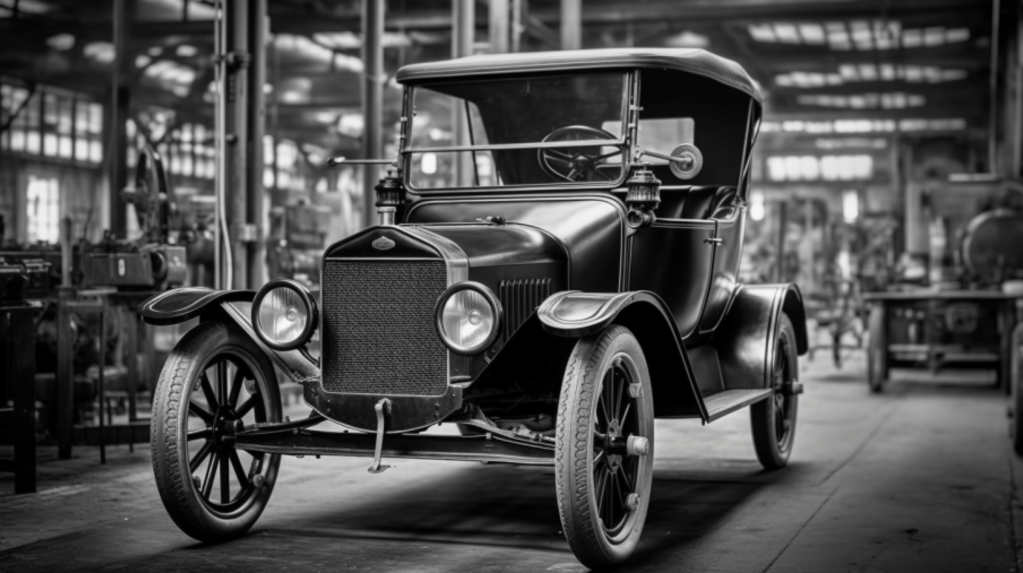
Henry Ford’s Model T didn’t change the world because it was a well designed car. It changed the world because it was produced through a well designed system.
Had Ford sought to build an affordable car by refining the vehicle itself, there’s no way he would have been able to deliver something at a price point, level of quality, and scale of manufacture required to reach the masses.
The Model T was a car, but it was also a factory, a business model, and for better or worse, a new kind of work.
Design isn’t the product, it’s everything we do to enable a shift in our environment.
Most designers don’t see that. They view their scope solely in terms of developing the form and function of a consumer-ready output. That approach works fine for incremental improvement, but true leverage and innovation happens when we think comprehensively.
The really difficult task is finding a path to positioning ourselves professionally and economically in this kind total-picture role. Conventional design jobs definitely aren’t set up to make it a frictionless transition.
For anyone who takes this seriously, routes to entrepreneurship or “intrepreneurship” (entrepreneurship inside an existing company) may be worth investigating.
It seems to me that beyond a certain level of ambition, the link between these terms and the definition of design I champion becomes impossible to break.
 Designable.blog