
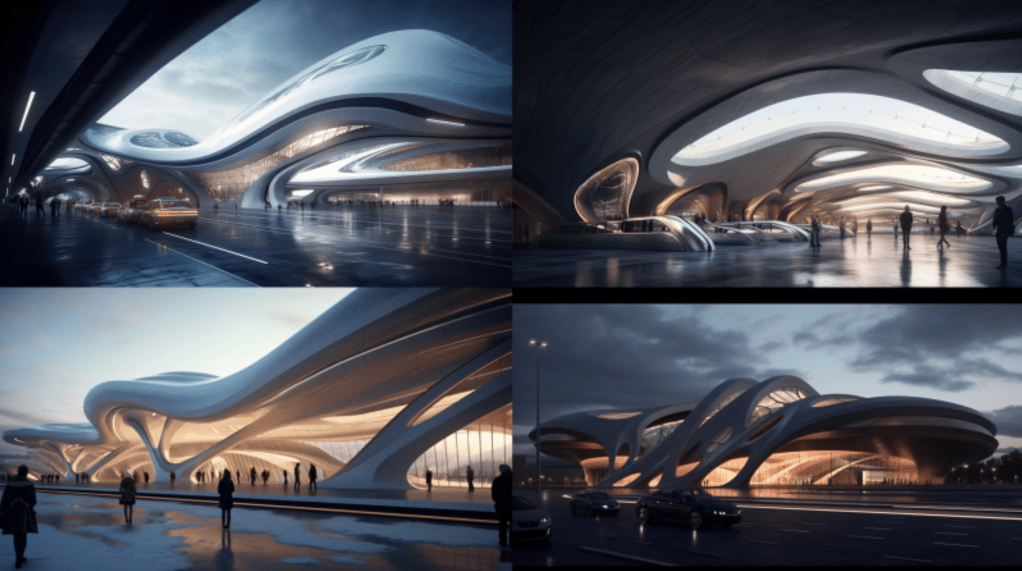
The creative industries are changing fast. Three years ago everyone thought this would be the last area that computers would automate. Turns out we got it wrong. We’re actually up first.
What’s kind of striking is the degree to which a lot of young people seem to be proceeding with a fairly business as usual approach to their education and careers. I’ve yet to meet someone in this space who will actually acknowledge that AI poses a significant risk to their planned professional path.
Of course it does.
Midjourney can already render more visually compelling building concepts than 99% of graduating architecture students, and it can spit out dozens of them in a few minutes (see the image grid at the top of this post). When I bring this up with my peers, I often hear a response that goes something like “Well, it can’t turn those images into floor plans, so I think we’re safe”.
We’re not safe.
The images are first, but the floor plans (and a whole lot more) are on their way. I’m betting we’ll pass that technological milestone before incoming design school freshmen receive their diplomas. And even if we don’t, is converting renders into floor plans really your definition of a fulfilling job?
This existentially overwhelming string of developments may trigger a desire to bury one’s head in the sand. Potentially more dangerous, it may induce people to acknowledge the arrival of AI without really internalizing or acting on the profound implications that such a moment entails, creating a false sense of security. I’m seeing this a lot.
Make no mistake, this is not a period in history that will reward late adopters or slow responders; so if there were ever a moment to get serious about being proactive, this is it.
But what does proactive look like?
The future of professional success in the age of AI will belong to people who invest now in building habits and mindsets that will make their careers more adaptable to the sudden and rapid cycles of change that are on their way. It seems likely to me that the best way of doing this will be a combination of attentiveness to technological and social shifts, radical flexibility about the way we define our jobs and careers, and steadfast dedication to the reasons why we’ve chosen work in the first place.
As for what people should actually study or pursue professionally, that’s hard to say. I suspect the new normal for education may look more like periodic retooling as opposed to a one-time graduation. Learning specific software and standards may be unavoidable if you wish to get a job in the short term, but my guess is that the place really worth spending most of our effort is in developing generalized design reasoning skills, a sense of ethics and taste, and comfort with idea communication.
What will it take for you to stay on top of current developments given the accelerating rate of change? What kinds of knowledge and practices would enable professional adaptability given your goals? Do you have clarity about the kind of change you’re here to enable?
Each of us needs to figure out the answers if we’re going to successfully surf the waves ahead.
 Designable.blog